What Do Termite Droppings Look Like? A Homeowner's Guide to Identifying Termite Frass
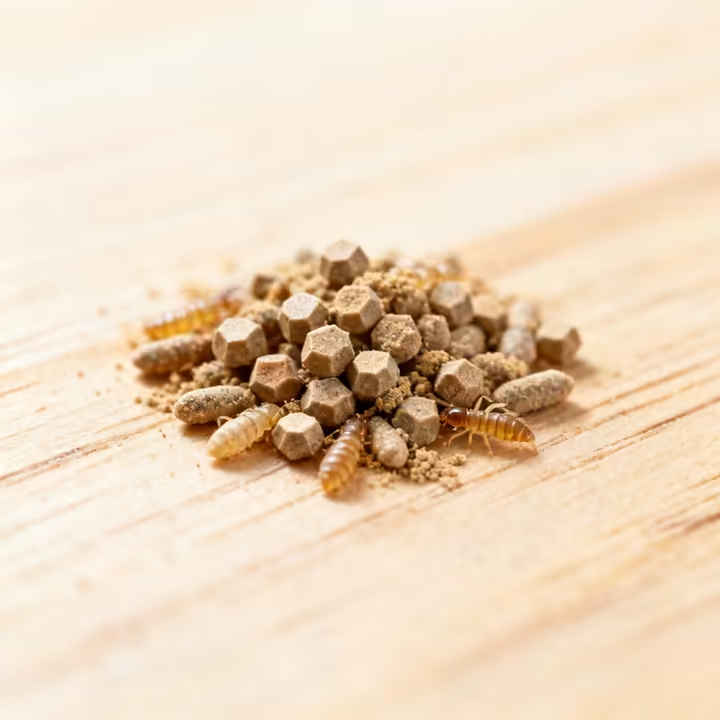
Found a weird pile of tiny, sawdust-looking stuff on your windowsill or floor? Don't panic... but don't ignore it. That could be termite poop (the fancy word is "frass"). Since termites are sneaky and hide inside your walls, their droppings are often the only clue you have an infestation.
What is Termite Poop (Frass)?
Termite frass is just a nice name for termite poop. It almost always comes from drywood termites, the kind that live inside the wood they eat. To save water, their bodies squeeze every last drop out of their food, creating tiny, hard, dry pellets.
To keep their tunnels tidy, they chew little "kick-out holes" (about 1-2 mm wide) in the wood and push the frass out. This is why it collects in piles on the surfaces below. Finding a pile of frass means a termite colony is living right above it.
How to Spot Termite Frass
At first, you might mistake frass for sawdust, sand, or spilled pepper. Look closer, though. Each grain of frass is a tiny, six-sided pellet with concave sides, often described as looking like a miniature, deflated football.
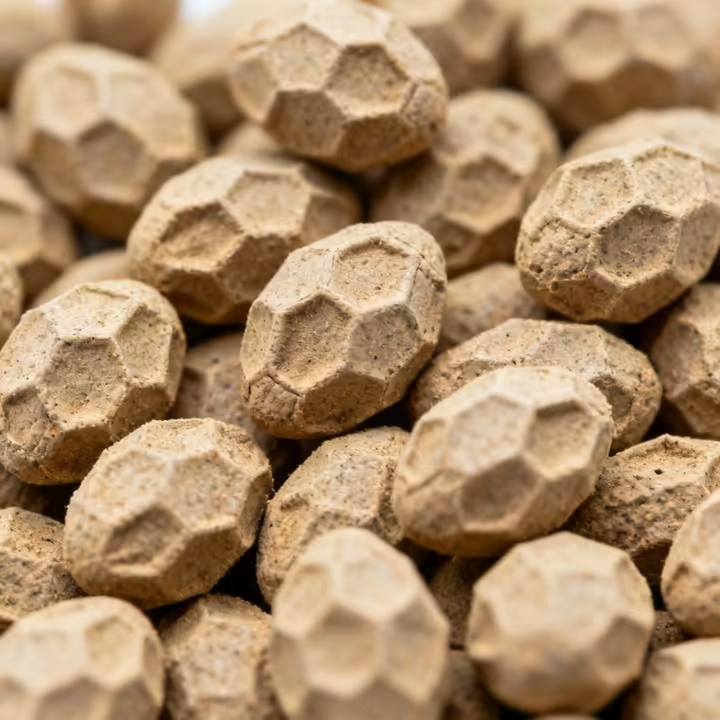
The pellets feel hard and gritty, not soft like sawdust. They're all about the same size, around 1 millimeter long. The color changes depending on what wood they're munching on, so it can be light tan, dark brown, or even black.
Because termites push the frass out of small holes, it collects in neat little piles or mounds. This uniformity is what makes it stand out from regular household dust or dirt.
Drywood vs. Subterranean Termites
These poop pellets are a clue for drywood termites only. You won't find similar piles from their cousins, the subterranean termites. Their biology and habits are completely different, so they leave behind different clues.
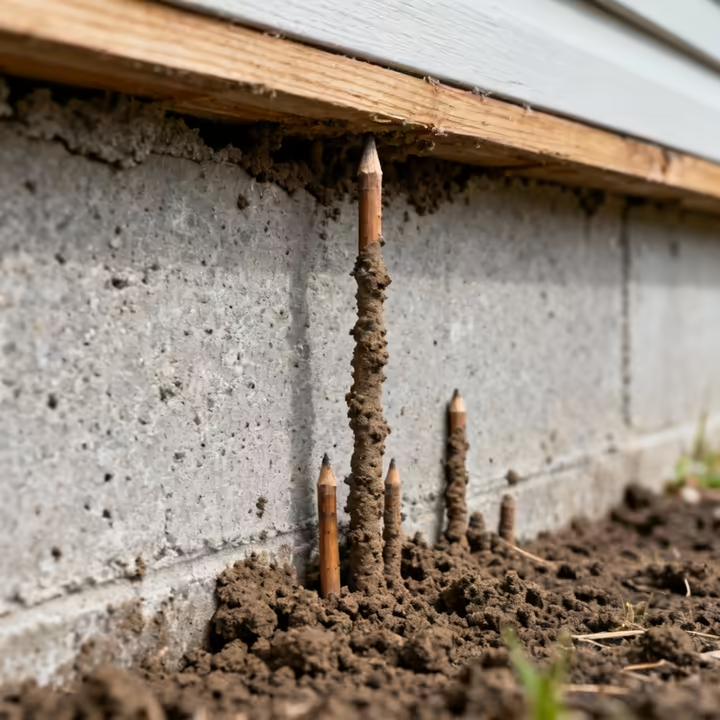
Subterranean termites live underground and need lots of moisture to survive. Their poop is wet, and they mix it with dirt, wood particles, and spit to build protective mud tubes. These tubes look like pencil-sized dirt tunnels running up foundation walls, support piers, or in crawl spaces, and they act like covered highways for the termites to travel safely from their nest to the wood in your house.
Is It Frass or Something Else?
Once you know you're not dealing with subterranean termites, you need to make sure the piles aren't something else. Several things can look similar at a glance.
Carpenter Ants
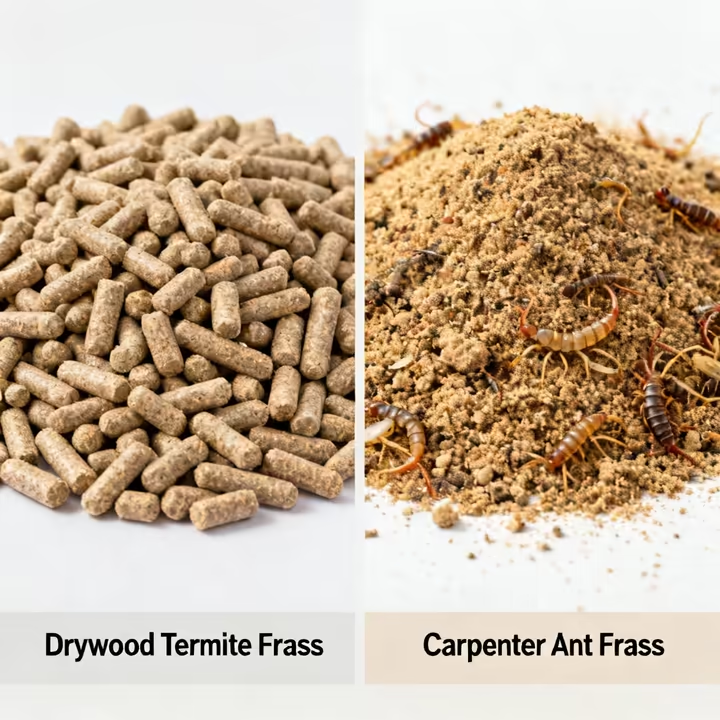
Carpenter ants also leave behind piles of stuff, but it's different. They don't eat wood, they just chew it up and spit it out to make nests. Their "frass" is basically just wood shavings mixed with bits of dead ants, like tiny legs or wings. Termite frass is just poop... no bug parts included.
Sawdust, Dirt, and Eggs
Real sawdust from construction is soft and flaky, not hard and pellet-shaped. Spilled dirt or sand won't have the uniform, six-sided shape of each particle. And don't worry, they aren't termite eggs.
Termite eggs are soft, tiny (less than 1mm), and whitish. They're kept safe deep inside the nest and are never kicked out into the open. If you're seeing hard, dark pellets, it's definitely frass, not eggs.
Where to Look for Frass
Gravity is your friend here. Since termites push the frass out of holes, it falls straight down. The pile of poop is an X that marks the spot... the infestation is directly above it.
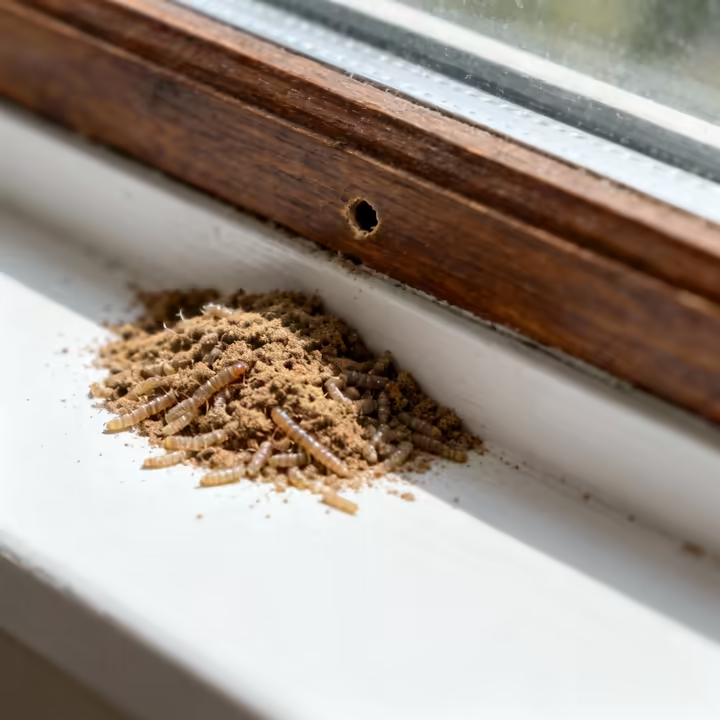
Check common spots like window sills (right under the wooden frame) and along baseboards. Look under or behind furniture, inside cabinets, and anywhere under wooden ceiling beams or attic joists. Don't forget to check unfinished attics and crawl spaces with a flashlight, scanning the floor directly under rafters and roof decking.
Found Frass? Here’s What to Do
Finding what looks like termite frass means it's time to act, but calmly. The problem has likely been going on for a while, so a methodical response is best.
Step 1: Document, Don't Just Dust
Okay, you found some. First, take a few clear pictures for when you call a professional. Next, don't just sweep it all up, scoop a small sample into a plastic bag or jar for proof.
After you have your sample, you can clean the rest up. Now, watch that spot. If a new pile shows up in a few days or weeks, you have undeniable proof of an active termite party.
Is It Dangerous?
Good news... termite frass isn't considered toxic to people or pets. It's just digested wood, so it doesn't carry diseases like rodent droppings do. However, the fine dust can irritate allergies or asthma, so maybe wear a simple dust mask if you're cleaning up a big pile.
The real danger of frass is to your house. It's a clear warning sign that termites are actively damaging your home's structure from the inside out.
Step 2: Call a Professional
It's normal to find frass without ever seeing a single termite. They hide inside the wood their whole lives, so their poop is often the only proof you'll get. This isn't a DIY job.
Seeing frass means you need to call a licensed pest control company right away. An expert can inspect your home, confirm the type of termite, find out how bad the infestation is, and create the right treatment plan to protect your property.
Works cited
- Searching for biological feedstock material: 3D printing of wood particles from house borer and drywood termite frass | PLOS One - Research journals, https://journals.plos.org/plosone/article?id=10.1371/journal.pone.0246511
- Searching for biological feedstock material: 3D printing of wood particles from house borer and drywood termite frass - PubMed, https://pubmed.ncbi.nlm.nih.gov/33606771/
- Termite Droppings But No Termites? | Eliminate 'Em Pest Control, https://eliminateem.com/blog/termite-droppings-but-no-termites/
- What Are Termite Droppings? - Dodson Pest Control, https://www.dodsonbros.com/termites/what-are-termite-droppings/
- What is Termite Frass? | A-Action Pest Control, https://www.a-actionpestcontrol.com/our-blog/what-is-termite-frass
- Is Sawdust a Sign of Termites? How to Spot an Infestation - Terminix, https://www.terminix.com/termites/signs/sawdust/
- What Is the Difference Between Drywood and Subterranean Termites?, https://pinnaclepest.com/drywood-vs-subterranean-termites/
- ENY-211/IG098: Drywood and Dampwood Termites - UF/IFAS EDIS - University of Florida, https://edis.ifas.ufl.edu/publication/IG098
- What Do Termite Droppings or Frass Look Like? | Orkin, https://www.orkin.com/pests/termites/termite-droppings
- Termite Frass 101 | Hulett Environmental Services, https://www.bugs.com/blog/termite-frass-101/
- Searching for biological feedstock material: 3D printing of wood particles from house borer and drywood termite frass, https://pmc.ncbi.nlm.nih.gov/articles/PMC7894899/
- How to Identify Termite Droppings and Protect Your Home, https://talenttermite.com/how-to-identify-termite-droppings-and-protect-your-home-from-infestation/
- Drywood Termite Fecal Pellets, Vol. 6, No. 21 | Mississippi State ..., https://extension.msstate.edu/newsletters/bugs-eye-view/2020/drywood-termite-fecal-pellets-vol-6-no-21
- How to Identify Drywood Termite Signs: A Homeowner's Guide - Admiral Pest Control, https://admiralpest.com/how-to-identify-drywood-termite-signs-a-homeowners-guide/
- Termite Droppings in Miami: What to Look For - Native Pest Management, https://www.nativepestmanagement.com/blog/2025/march/termite-droppings-in-miami-what-to-look-for/
- What Are Termite Mud Tubes | Signs Of Termite Infestation - Orkin, https://www.orkin.com/pests/termites/termite-mud-tubes
- www.pbs.org, https://www.pbs.org/newshour/science/termites-transform-home-poop-palace#:~:text=%E2%80%9CThey%20build%20their%20own%20houses,smells%20smoky%2C%E2%80%9D%20he%20said.&text=And%20while%20they're%20using,also%20feeding%20on%20the%20wood.
- Subterranean and Other Termites Management Guidelines - UC IPM, https://ipm.ucanr.edu/home-and-landscape/subterranean-and-other-termites/pest-notes/
- Subterranean Termites, https://www-aes.tamu.edu/files/2010/06/SubterraneanTermites.pdf
- Termite Mud Tubes | All You Need to Know - Western Exterminator, https://www.westernexterminator.com/blog/termites/termite-mud-tubes
- What Are Termite Mud Tubes? - Dodson Pest Control, https://www.dodsonbros.com/termites/what-are-termite-mud-tubes/
- Ant Droppings vs Termite Droppings: How to Tell the Difference? - Dial Environmental, https://www.dialenvironmental.com/blog/ant-droppings-vs-termite-droppings-how-to-tell-the-difference
- www.rocklinpestcontrol.com, https://www.rocklinpestcontrol.com/blog/2022/april/termite-damage-vs-carpenter-ant-damage/#:~:text=The%20Frass%3A&text=(You%20can%20see%20the%20insect,not%20include%20any%20wood%20shavings.
- Carpenter Ant Frass Vs. Termite Frass: What's the Difference? - Pinnacle Pest Control, https://pinnaclepest.com/carpenter-ant-frass-vs-termite-frass/
- Carpenter ant: Frass - UC IPM, https://ipm.ucanr.edu/TOOLS/ANTKEY/carpfrass.html
- Termite Frass vs Ant Frass: Expert Tips for Homeowners, https://www.termitespecialist.sg/termite-frass-vs-ant-frass/
- Are these termite eggs? They are very hard but keep falling out of a wood artwork we recently acquired, sometimes a whole bunch out then nothing for a while : r/pestcontrol - Reddit, https://www.reddit.com/r/pestcontrol/comments/u8yw5x/are_these_termite_eggs_they_are_very_hard_but/
- www.terminix.com, https://www.terminix.com/termites/signs/droppings/#:~:text=Termite%20droppings%20are%20tiny%2C%20light,porches%2C%20attics%2C%20and%20crawlspaces.
- Termite Droppings: Identification and What You Need to Know, https://www.terminix.com/termites/signs/droppings/
- bepestfree.com, https://bepestfree.com/termite-droppings-from-your-ceiling/#:~:text=Termite%20droppings%20are%20small%2C%20pellet,are%20usually%20tan%20to%20brown.
- Termite Droppings: Is Termite Frass a Bad Sign? | EcoGuard, https://www.ecoguardpestmanagement.com/pest-resources/termite-droppings
- Are Termite Droppings Hazardous? - ACTION Termite & Pest Control, https://www.actiontermitecontrol.com/are-termite-droppings-hazardous/
- Can Termites Be Harmful To Your Pets?, https://www.chemfreeexterminating.com/can-termites-be-harmful-to-your-pets/
- Termite Droppings: Otherwise Known as Frass | All "U" Need Pest ..., https://alluneedpest.com/blog/termite-droppings-otherwise-known-as-frass/
- Are Termites Dangerous to People or Pets? - Specter Pest Control, https://specterservice.com/are-termites-dangerous-to-people-or-pets/
- Are Termites Harmful to Humans and Our Pets?, https://www.mightymitetermite.com/blog/are-termites-harmful-to-humans-and-our-pets/
- www.terminix.com, https://www.terminix.com/termites/signs/droppings/#:~:text=Schedule%20a%20professional%20termite%20inspection,their%20droppings%20may%20look%20different.