A Visual Guide to Identifying Termites and Their Damage
Termites. They're called "silent destroyers" for a reason. They chew through your house 24/7 without making a peep. This guide will show you how to spot these little vandals and their handiwork... before they bring the house down.
Meet the Enemy: A Termite's Profile
Worker termites are the main culprits. They're soft, squishy, and creamy-white, kind of see-through. People call them "white ants", but they aren't ants at all.
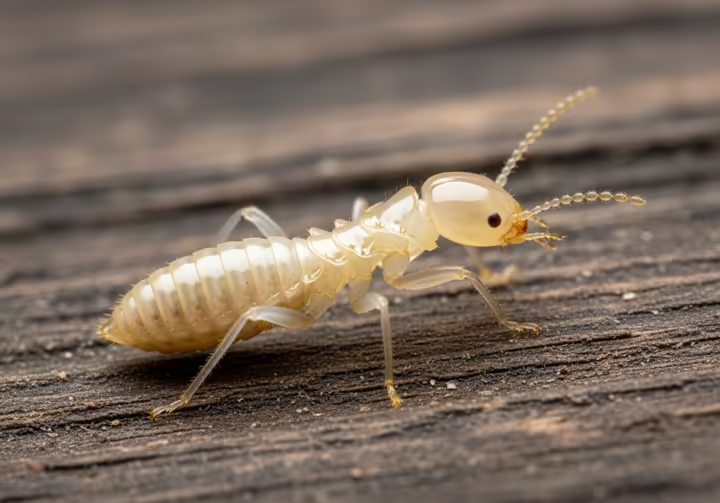
Here's how to tell. First, look at the waist. Termites have a thick, straight waist, giving them a blocky, cigar-like shape.
Next, the antennae. A termite's are straight, like a tiny string of beads. Finally, wings (if you see the flying kind). The reproductive termites, or "swarmers," have four wings that are all the same size. Big clue.
Termite or Ant? The Great Pretender
Homeowners get this wrong all the time, especially when they see a swarm of flying insects. But telling them apart is easy if you know what to look for.
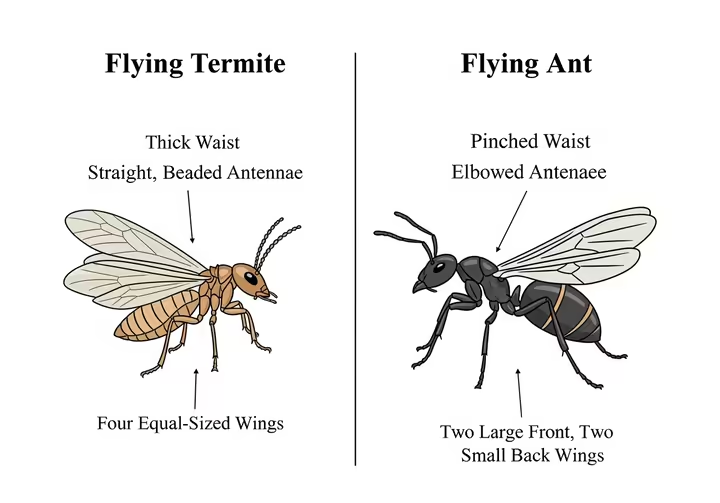
An ant's body has three clear parts, with a super-thin, "pinched" waist. A termite swarmer is more of a solid, straight shape. Ant antennae are bent or "elbowed," while termite antennae are straight and beaded.
And the wings are the dead giveaway. Ants have two big front wings and two smaller back wings. A termite has four wings, all identical in size and shape. If you find a pile of identical tiny wings on a windowsill... you've got termites.
The Usual Suspects
Subterranean Termites
These guys are the most common house-eaters in the US (they're everywhere but Alaska). They live underground and need moisture to survive. You might see a few different types. The workers are small, pale, and do all the chewing.
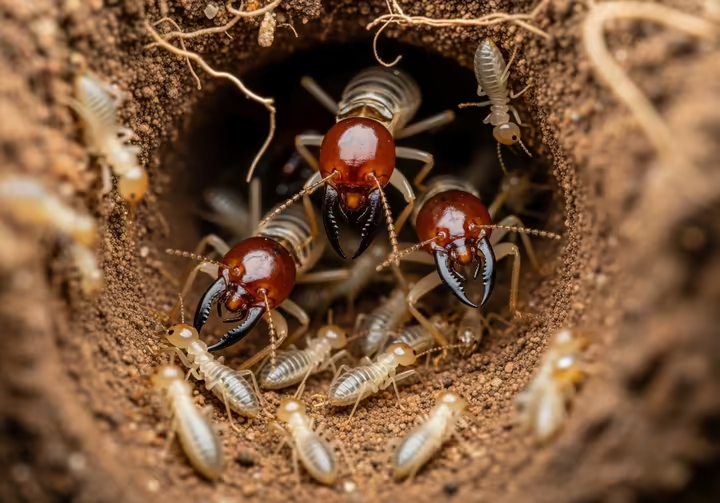
The soldiers have big ol' heads and jaws to defend the nest. But you're most likely to see the swarmers. They're dark-colored, about a half-inch long (with wings), and show up in big groups in the spring to start new colonies.
Drywood Termites
These termites live right inside dry wood, no soil contact needed. They're common in warmer, coastal states. You probably won't see the termites themselves. Instead, look for their poop, called "frass."
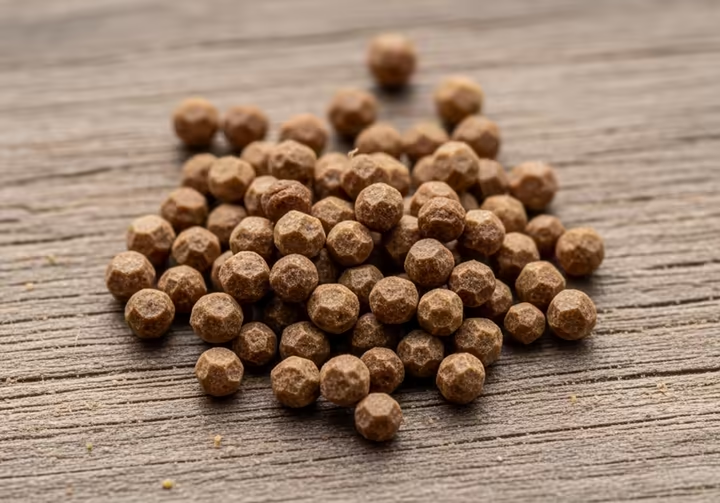
They push it out of tiny "kick-out holes" in the wood. The frass piles up and looks like sawdust or coffee grounds. Look closer, and you'll see tiny, hard, six-sided pellets. Finding these is a sure sign you have drywood termites camping out in your furniture or walls.
Dampwood Termites
No surprise here, these termites love soggy, wet wood. Find them in rotting logs, stumps, or anywhere your house has a leak or drainage problem. They're the biggest of the bunch, with soldiers reaching 3/4 of an inch long.
They don't build mud tubes, and they don't leave neat piles of frass. The main clue is the location, finding huge termites in wood that's damp and decaying.
A Termite's Life Story
It all starts with an egg. They're tiny, oval, and whitish, like a minuscule jelly bean. The queen lays them in clusters deep inside the nest.
Out hatches a baby termite, or nymph. They look like tiny versions of the adult workers. Here's where it gets interesting.
The queen uses chemical scents (pheromones) to tell the nymphs what the colony needs. Based on her signals, a nymph will grow up to be a worker, a soldier, or a flying swarmer ready to start a new family.
The Evidence They Leave Behind
Chewed-Up Wood
Subterranean termites are messy eaters. If you break open wood they've attacked, you'll see tunnels that follow the grain, making it look layered or honeycombed. The tunnels are lined with dirt and mud.
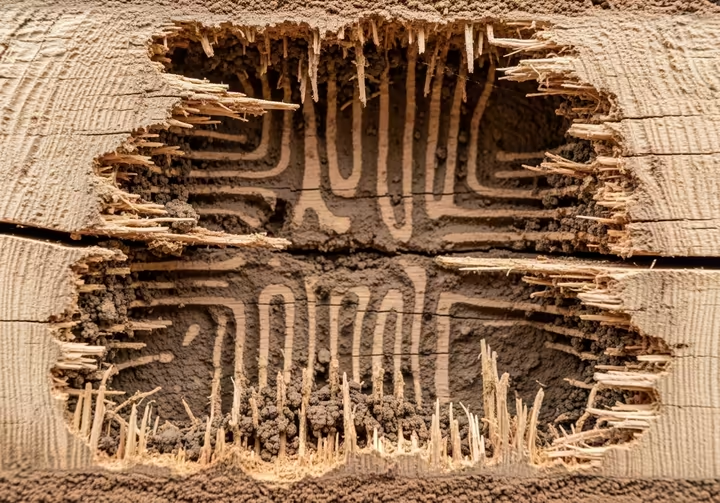
Drywood termites are neat freaks. Their galleries are clean and smooth, like they've been sanded down. No dirt at all.
Mud Tubes
This is the smoking gun for subterranean termites. They build pencil-wide mud tunnels to get from their colony in the soil to the wood in your house.
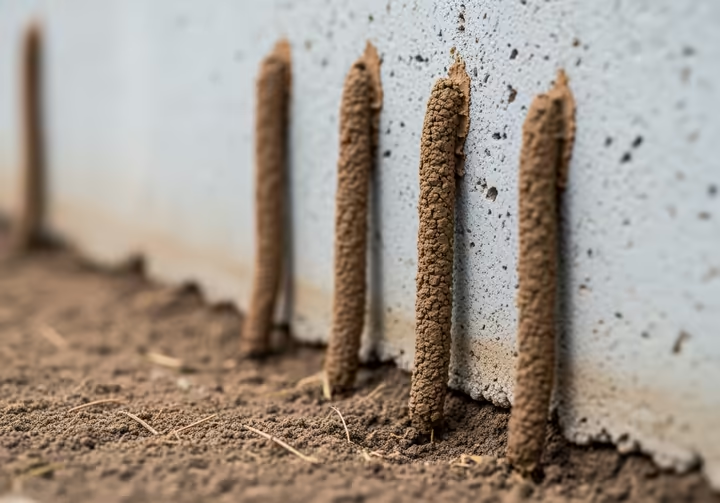
These tubes are their protected highways. You'll find them running up your foundation, along support posts, or coming out of cracks in the floor.
Bubbling Paint & Hollow Walls
See paint that's blistering or peeling, but can't find a leak? It could be termites. They bring moisture into the walls, which makes the paint bubble.
Sometimes you can even see faint, maze-like trails under the paint. Tap the spot, if it sounds hollow or papery, that's a bad sign. The wood behind it is likely gone.
The Swarm and The Wings
A swarm is hard to miss, hundreds or thousands of winged termites suddenly appearing from a crack in the wall. After a short flight, they drop their wings.
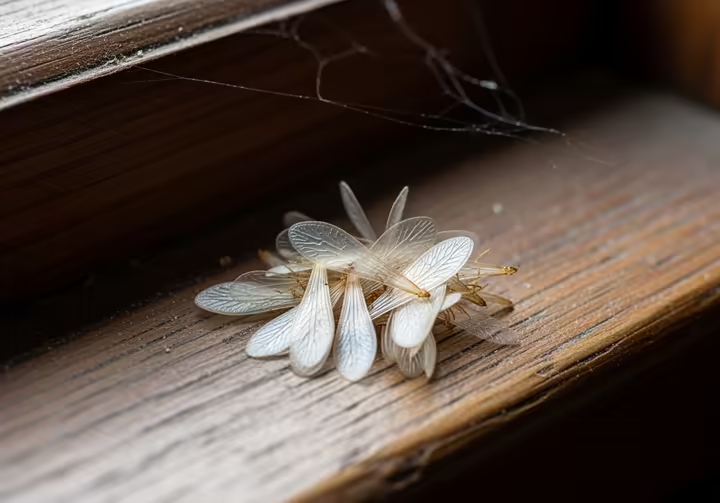
Finding little piles of discarded wings is a huge clue. They're all the same size and look like tiny fish scales. Check windowsills and spiderwebs, they often collect there.
Where to Look: Common Hotspots
Firewood Stacks
A woodpile next to your house is a termite buffet and a launchpad for an invasion. Check logs for hollowed-out tunnels or packed-in mud.
Best practice? Keep firewood stacked off the ground and far away from your house's foundation. Seriously.
Mulch & Garden Beds
Mulch keeps soil moist and protected... which is perfect for termites. It gives them a cozy, hidden path right up to your home.
Rake back mulch near the foundation. Look for pale little worker termites or their thin mud tubes crisscrossing the soil.
The Foundation
This is Termite Grand Central Station. It's the main bridge from the soil into your house. Do a thorough check of your foundation, inside and out.
Look for those tell-tale, earthy mud tubes snaking up from the ground. They are a direct, active link to the colony below.
So You Found Something... Now What?
Now you know what to look for. The straight waist of a termite versus the pinched waist of an ant. The mud tubes of subterranean termites. The sawdust-like poop of drywood termites.
Seeing any of these signs means it's time to act. But this is not a DIY job.
Termite colonies are huge, hidden, and tough to kill. If you see any of the evidence in this guide, your next step is simple, call a licensed pest control professional. They'll know what to do to protect your home.
Works cited
- Signs of Termites to Look for at Home | Ehrlich Pest Control, https://www.jcehrlich.com/pest-insights/termites/7-signs-you-may-have-termites
- Why is early detection crucial in termite control? - Redi National Pest Eliminators, https://redinational.com/why-is-early-detection-crucial-in-termite-control/
- Eastern Subterranean Termites: How To Identify And Eliminate - Big Time Pest Control, https://www.bigtimepestcontrol.com/learning-center/eastern-subterranean-termites
- How To Detect and Deter Termites - This Old House, https://www.thisoldhouse.com/pest-control/21014998/how-to-detect-and-deter-termites
- Subterranean Termites: Damage, Prevention, & Control: NPMA, https://www.pestworld.org/pest-guide/termites/subterranean-termites/
- The Importance of Termite Inspections - Kil Mor Pest Management, https://kilmorbugs.com/the-importance-of-a-termite-inspections/
- The Importance Of Early Termite Detection, https://termiteboys.com/the-importance-of-early-termite-detection/
- Termite Identification: What Do Termites Look Like? - Terminix, https://www.terminix.com/termites/identification/
- Termite Anatomy: How to Identify & Prevent Infestations - Radar Pest Control, https://radarpestcontrol.com.au/termite-anatomy/
- All About Termites - Facts, Life Cycle, Reproduction, History & More - DoMyOwn, https://www.domyown.com/all-about-termites-c-3_678.html
- Termites vs Ants: What's the Difference? - Terminix, https://www.terminix.com/termites/types/differences-between-termites-and-carpenter-ants/
- www.arizonatermitespecialists.com, https://www.arizonatermitespecialists.com/blog/2020/march/anatomy-of-a-termite/#:~:text=Like%20all%20insects%2C%20termites%20have,antennae%3B%20ants'%20are%20bent.
- What Do Termites Look Like & How to Identify Them? - PlantIn, https://myplantin.com/blog/what-do-termites-look-like
- Termites - Black Diamond Pest Control Library, https://www.blackdiamondpestcontrol.com/bugs/termite
- www.solutionsstores.com, https://www.solutionsstores.com/ants-vs-termites#:~:text=By%20looking%20at%20their%20body,much%20skinnier%20than%20a%20termite's.
- Do You Know the Difference Between Carpenter Ants and Termites?, https://www.termiopest.com/blog/post/do-you-know-the-difference-between-carpenter-ants-and-termites
- Termite vs Ant - Insect ID - University of Wisconsin–Madison, https://insectid.wisc.edu/2014/05/16/termite-vs-ant/
- Signs of Termites | How to Check for Termites | Orkin, https://www.orkin.com/pests/termites/how-to-identify-termite-activity
- Subterranean Termites, https://www-aes.tamu.edu/files/2010/06/SubterraneanTermites.pdf
- Drywood Termites Management Guidelines - UC IPM, https://ipm.ucanr.edu/home-and-landscape/drywood-termites/pest-notes/
- Termite Frass 101 | Hulett Environmental Services, https://www.bugs.com/blog/termite-frass-101/
- How to Identify Drywood Termite Droppings | Thrasher Termite ..., https://thrasherpestcontrol.com/drywood-termite-droppings/
- Termite Droppings Guide: What They Look Like, Health Risks & What To Do (2025), https://detecttermite.com/termite-droppings/
- Dampwood Termite Facts & Identification | Presto-X Pest Control, https://www.prestox.com/services/pest-guides/termite-control/damp-wood-termites
- Dampwood Termites: Dampwood Termite Treatment & Control, https://www.pestworld.org/pest-guide/termites/dampwood-termites/
- Dampwood Termites: Identification, Facts & Signs - Terminix, https://www.terminix.com/termites/types/dampwood/
- Florida Dampwood Termites: Tips for Identification & Control - Native Pest Management, https://www.nativepestmanagement.com/blog/2025/april/florida-dampwood-termites-tips-for-identification-control/
- Termite Eggs: Are They Anything to Worry About? - Hawx Pest Control, https://hawxpestcontrol.com/termite-eggs-are-they-anything-to-worry-about/
- Termite Identification | C-shine Pakistan, https://www.c-shinegroup.com/services/pest-control/termites/identification
- Termite Life Cycle and Life Span | EcoGuard Pest Management, https://www.ecoguardpestmanagement.com/pest-resources/termite-life-cycle
- Termite Life Cycle: What Termites Look Like at Each Stage - Flick Pest Control, https://www.flick.com.au/blog/termite-life-cycle-what-termites-look-like-at-each-stage/
- Termite Life Cycle & Lifespan - How Long do Termites Live? | Orkin, https://www.orkin.com/pests/termites/life-cycle
- Termites: Facts, Information, and Treatment - Fox Pest Control, https://fox-pest.com/pest-files/termites/
- Subterranean termites - Envu U.S., https://www.us.envu.com/resources/subterranean-termites
- What Does Termite Damage Look Like? - M&M Pest Control, https://mandmpestcontrol.com/what-does-termite-damage-look-like/
- What Are Termite Mud Tubes | Signs Of Termite Infestation | Orkin, https://www.orkin.com/pests/termites/termite-mud-tubes
- www.dodsonbros.com, https://www.dodsonbros.com/termites/what-are-termite-mud-tubes/#:~:text=They%20create%20the%20tubes%20from,colony%20and%20the%20food%20source.
- Signs of Termites in Walls: Identify Termite Nests & Damage in Drywall - Terminix, https://www.terminix.com/termites/signs-of-termites-in-walls/
- Signs of Termite Damage: Peeling or Bubbling Paint - Pests - Orkin, https://www.orkin.com/pests/termites/damage/termites-and-paint
- Signs of Termites in Walls | Termites in Drywall - Orkin, https://www.orkin.com/pests/termites/damage/termite-wall-damage
- Signs of Termite Damage in Drywall | Ehrlich Pest Control, https://www.jcehrlich.com/pest-insights/termites/termite-damage-to-drywall
- www.terminix.com, https://www.terminix.com/termites/signs/#:~:text=Signs%20of%20termites%20in%20your,droppings)%2C%20and%20moldy%20scents.
- 10 signs of a termite infestation - Western Exterminator, https://www.westernexterminator.com/blog/termites/10-signs-termite-infestation
- Termites in Firewood: How to Spot Them & What to Do - Backyard Boss, https://www.backyardboss.net/termites-in-firewood/
- What do wood termites look like? - Panadero, https://panadero.com/wood-termites/
- Identifying and Preventing Termites in Firewood - Arrow Exterminators, https://www.arrowexterminators.com/learning-center/blog/firewood-foes-signs-you-have-termites-or-carpenter-ants-in-your-logs
- What To Do If You Spot Signs Of Termites In Your Yard - Dodson Pest Control, https://www.dodsonbros.com/termites/what-to-do-if-you-spot-signs-of-termites-in-your-yard/
- Signs Of Termites In Mulch - Poor Boy Termite Control, https://poorboytermite.com/signs-of-termites-in-mulch/
- www.terminix-triad.com, https://www.terminix-triad.com/our-blog/does-mulch-attract-termites-signs-risks-and-prevention-tips#:~:text=Signs%20of%20Termites%20in%20Mulch,hollow%20interiors%20indicate%20termite%20feeding.
- Termites: How to Identify and Control Them | US EPA, https://www.epa.gov/safepestcontrol/termites-how-identify-and-control-them
- Signs of Termite Infestations- How to Check for Termites - Terminix, https://www.terminix.com/termites/signs/