Termite Wood Damage: A Homeowner's Guide
So you think you have termites? Maybe you just saw something weird on a baseboard. This guide shows you how to spot their handiwork, tell them apart from other house pests, and figure out what to do next.
How to Spot Termite Damage
Finding termite damage usually isn't dramatic. You might see bubbled paint on a baseboard and think it's from water. But when you press on it, the paint crackles over a hollow, dirt-lined space. 1

This happens because termites eat wood from the inside out, so the surface can look fine even when the core is gone. That's why your own senses are your best tools for detection. 4 You have to actively investigate by learning what to look, feel, and listen for.
Seeing, Feeling, and Hearing the Clues
The classic trick is the "tap test." Tap along baseboards, window sills, and door frames with a screwdriver handle. Healthy wood makes a solid thud, but termite-damaged wood sounds dull, hollow, or papery. 5
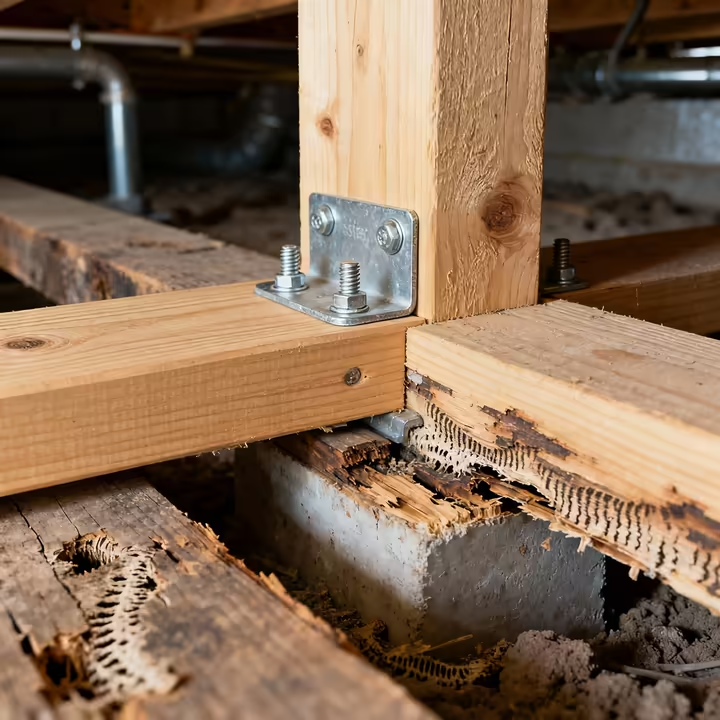
When you break open damaged wood, you'll see tunnels and chambers called "galleries." Subterranean termites follow the wood grain, eating the softer parts and leaving the harder wood behind. 7 This creates a distinctive layered or honeycombed pattern. 1
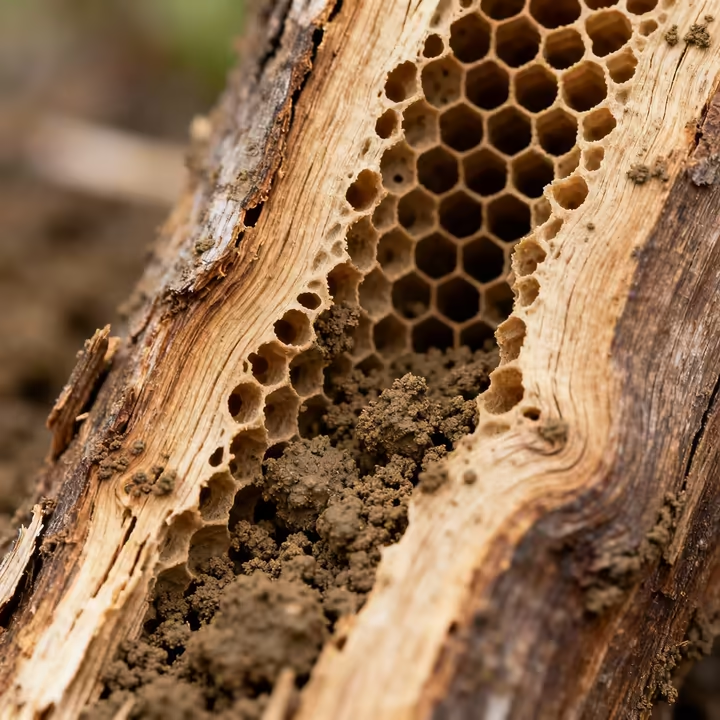
Unlike other wood-boring bugs, these galleries are messy. They're packed with a mix of soil, saliva, and termite poop, giving the tunnels a gritty, muddy texture. 5 This is a dead giveaway for subterranean termites.
Many signs of termites look like other household problems. The moisture they bring from the soil can make paint bubble, blister, or peel, just like water damage. 1 Wood floors might buckle or feel extra springy, and doors and windows can become hard to open as termites eat the frames. 2, 5
Homeowners often blame these issues on humidity, not realizing the wood is losing its internal strength. 10 On drywall, termites eat the paper backing, which can create faint, sunken lines or ripples on the wall. 1 You might also see tiny pinholes sealed with a speck of mud.
Other Telltale Signs
Subterranean termites build mud tubes to travel safely from their soil colony to the wood in your house. These pencil-sized tunnels run up foundation walls, support piers, and plumbing lines. 2, 11 They can be working tubes for travel, exploratory tubes for finding food, or drop tubes heading back to the soil. 14
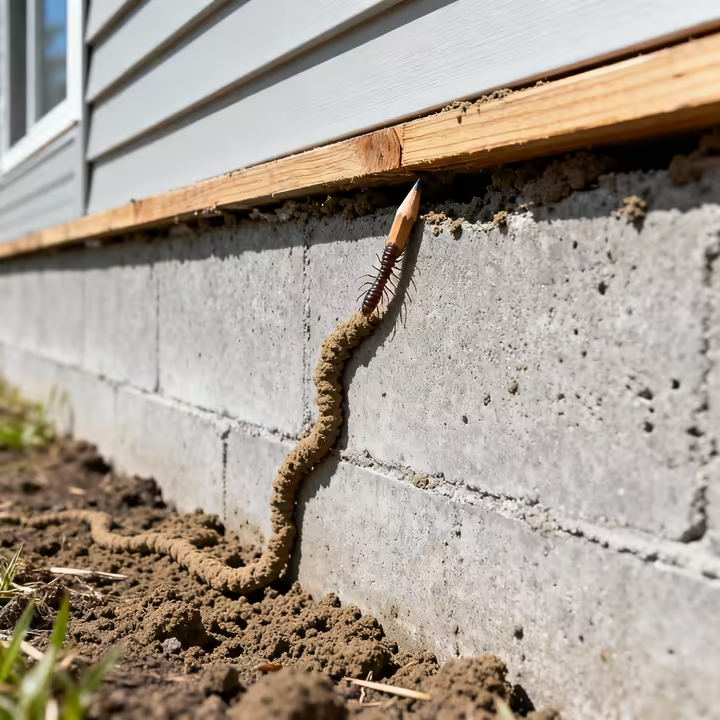
You can check if a tube is active by breaking off a small section. If you see creamy-white worker termites inside, or if the tube is repaired in a few days, the colony is active. 2
A mature colony produces winged termites called "swarmers" that fly off to start new colonies. 16 A swarm inside your home is an undeniable sign of an active infestation. 11
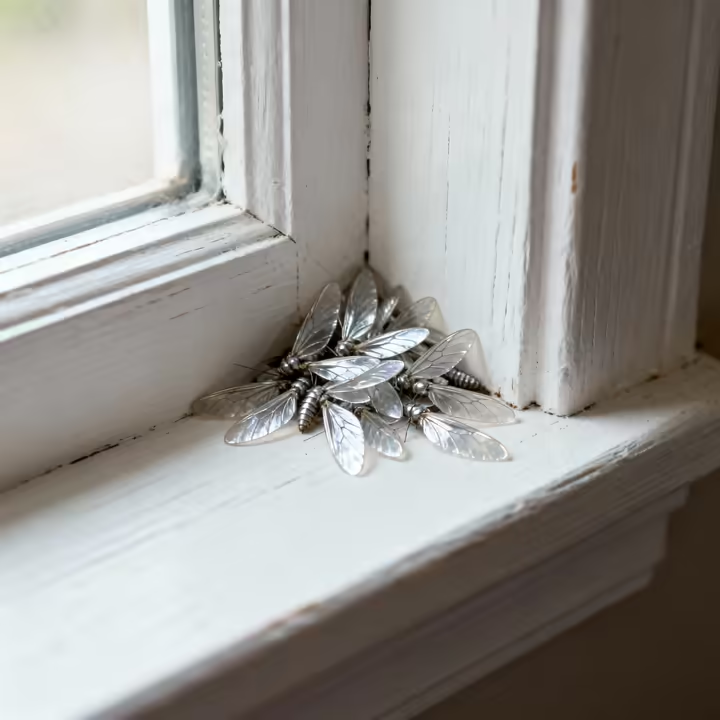
The most common evidence of a swarm is small piles of discarded wings. After their flight, swarmers shed their wings, which you'll often find on windowsills and near doors. 1
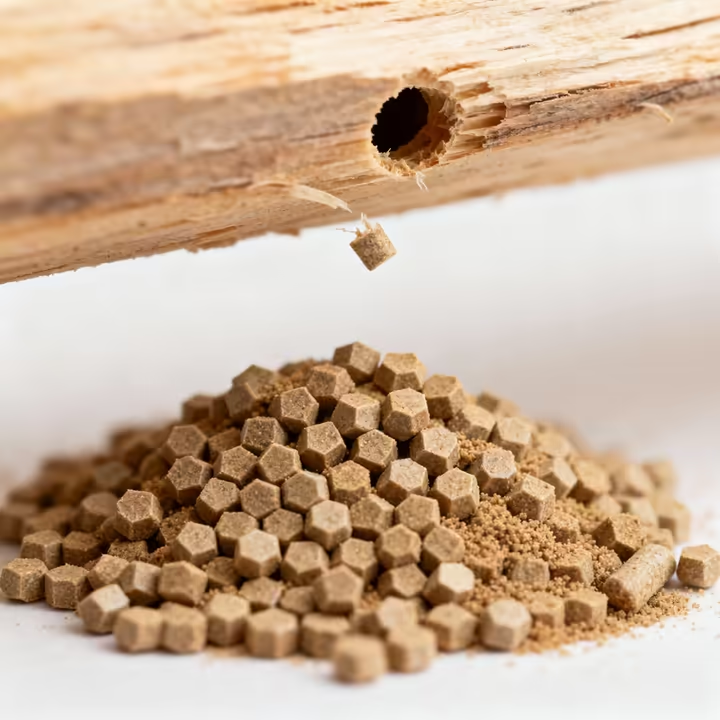
Drywood termites push their droppings, or "frass," out of small "kick-out holes" in the wood. 19 This frass looks like coarse sand or coffee grounds and collects in small mounds below. 2 Finding these hard, six-sided pellets is a clear sign of drywood termites.
Finding Where They Came From
To find the source of an infestation, just follow the moisture. 21 Subterranean termites need dampness and are drawn to wet wood or areas where wood touches soil. A search for termites is really a search for moisture problems.
Check for any wood siding, deck posts, or porch steps that make direct contact with the ground. 13 Also look for leaking outdoor faucets, clogged gutters, and poor drainage near your foundation. 21
Inside, inspect crawl spaces and basements for leaks and condensation. 21 Mud tubes often lead directly from these damp spots to a tiny crack in the foundation or a gap around a utility line. 13 Fixing these moisture issues helps locate the current problem and prevent future ones.
Is It Termites... Or Something Else?
Misidentifying wood damage leads to the wrong treatment. 7 Using a fungicide on termites won't work, and termiticide won't stop rot. Learning the unique signature of each pest is essential.
Termites vs. Wood Rot
Termite damage is caused by insects physically eating the wood. 25 Wood rot is a biological process where fungi decompose the wood in the presence of moisture. 7
Termite-damaged wood has hollow, often muddy tunnels inside but is usually dry. 7 Rotted wood is soft, spongy, and damp to the touch, and it crumbles easily when probed. 25
Wood rot also has a distinct musty, dank smell, which you won't get with termites. 7 Depending on the fungus, the rot can cause wood to turn dark and break into small cubes ("dry rot") or become stringy and whitish ("white rot"). 27
Termites vs. Other Bugs
Carpenter ants don't eat wood, they just dig it out to make nests. 9 Their galleries are very clean and smooth, with a "sandpapered" appearance, which is different from the messy, mud-filled tunnels of subterranean termites. 8
The frass from carpenter ants looks like coarse sawdust or fine wood shavings. 28 It's often mixed with other nest debris, like soil and dead insect parts. 30 Finding these piles is a sure sign of ants, not termites.
Powderpost beetle larvae cause damage by tunneling through wood. 31 The main sign is multiple small, round "shot holes" on the wood's surface, which are exit holes created by emerging adult beetles. 28
If you tap wood infested by powderpost beetles, a very fine, flour-like powder will sift out of the exit holes. 9 This talc-like frass is unique to them and easy to distinguish from the waste of termites or carpenter ants.
Moisture is the common enemy that connects most of these issues. 13, 26 It attracts termites, causes wood rot, and creates the soft wood that carpenter ants love to nest in. 34 A good moisture-control strategy is the best defense against all of them.
Wood-Destroying Organism Identification Chart
| Feature | Subterranean Termites | Drywood Termites | Wood Rot (Fungus) | Carpenter Ants | Powderpost Beetles |
|---|---|---|---|---|---|
| Primary Cause | Insect Consumption | Insect Consumption | Fungal Decomposition | Insect Excavation (Nesting) | Insect Larvae Consumption |
| Gallery Appearance | Mud-packed, dirty, follows wood grain, layered/honeycombed | Smooth, clean galleries, may connect to form large voids | No galleries; wood is decomposed | Very smooth, clean, "sandpapered" appearance | Tunnels packed with fine powder, not visible from surface |
| Surface Evidence | Thin veneer of wood/paint, bubbling paint, mud tubes | Tiny "kick-out" holes | Discolored, cracked, cubical cracking pattern | Pinhole-sized openings | Multiple small, round "shot holes" (1/16" - 1/8") |
| Frass (Droppings) | None visible (used in tubes) | Small, hard, six-sided pellets (like coffee grounds) | None | Coarse sawdust-like shavings, may contain insect parts | Very fine, flour-like powder |
| Wood Texture | Hollow, papery, brittle | Hollow, brittle | Spongy, soft, crumbly, may be wet or dry | Hollow | Brittle, riddled with holes |
| Associated Signs | Mud tubes on foundation | Piles of pellets, discarded wings | Musty odor, presence of moisture/leaks | Piles of sawdust, visible ants | Piles of fine powder |
How Fast Do They Work?
After finding termites, the big question is, "How much time do I have?" The good news is that they aren't going to eat your house overnight. 35 The speed of destruction depends on the termite species, the colony's size, and the conditions in your home. 37
How Quickly They Eat
The termite species is the biggest variable. A typical subterranean colony may take three to eight years to cause noticeable, significant damage to a house. 39
In contrast, a large colony of the aggressive Formosan "super-termite" can inflict the same severe damage in as little as six months. 39 This species builds bigger colonies and eats wood much faster, making early detection critical. 35
A new colony is small and does little damage for the first few years. 11 The real threat is a mature colony, which can take three to five years to develop and explode in size to millions of workers. 37 By the time you see swarmers or visible damage, the colony has been growing for years.
Environmental conditions matter, too. Termites are more active and eat faster in warm, humid climates. 37 They are also more attracted to damp, soft wood, so a home with moisture issues is basically serving up an all-you-can-eat buffet. 39
What's the Worst That Can Happen?
Termites are called "silent destroyers" because they can eat your home's framework from the inside out for years before you notice. 4 By the time you see a sagging floor or a crack in the wall, the underlying damage is often severe.
They systematically weaken your home's skeleton. They eat floor joists (causing bouncy, sagging floors), wall studs (causing warped walls and misaligned doors), and attic rafters (causing a sagging roofline). 4, 45
And here's the kicker, homeowner's insurance almost universally excludes termite damage. 4 The repair bill, which can easily run into the thousands or tens of thousands, is all on you. 48
Because the threat is hidden, slow-moving, and uninsured, proactive prevention is a crucial financial strategy. In the most extreme cases, widespread damage can compromise a building's stability, leading to the risk of partial or total structural collapse. 46
Fixing the Damage
Recovery is a two-step process. First, a licensed professional must completely eradicate the colony. 50 Attempting repairs while termites are still active is just feeding them.
Repair or Replace?
Once the termites are gone, you must decide whether to repair or replace the damaged wood. The answer depends on the wood's function, not the amount of damage. 49
"Cosmetic" damage affects non-load-bearing elements like baseboards, trim, and drywall. 49 "Structural" damage affects the home's essential framework, like foundation sill plates, support beams, wall studs, and floor joists. 45
You can probe suspect wood with a screwdriver; if it sinks in easily or crumbles, its integrity is likely gone. 3 However, for any structural wood, always get a licensed contractor or structural engineer to make the final call. 51
Fixing Superficial Damage
You can often fix purely cosmetic damage yourself with wood hardeners and epoxy fillers. 56 The first step is to scrape or dig out all the loose, soft wood fibers until you reach solid wood. 58
Next, apply a liquid wood hardener, a thin resin that soaks in and creates a solid base for the filler. 53 Once it's cured, mix and apply a two-part epoxy wood filler, forcing it into all the voids. 56
Overfill the area slightly to account for sanding. After the epoxy cures, sand it smooth and flush with the surrounding wood, then prime and paint for a seamless repair. 51, 58
Fixing Structural Damage (Don't DIY This!)
Repairing the load-bearing skeleton of your home is a job for experienced and insured professional contractors. This is about safety, not just looks. There are two main methods: replacement and reinforcement.
In cases of severe damage, the only safe option is to completely remove and replace the structural member. 50 This often requires temporarily supporting the structure while the new lumber is installed.
For moderate damage, a common technique is "sistering." 55 This involves reinforcing the damaged joist or beam by securely attaching a new, identical piece of lumber alongside it. 61 This technique transfers the structural load to the new piece, restoring strength without a full replacement. 55, 62
Common Questions and Myths
Finding termites is stressful, and the mix of good and bad advice online doesn't help. 22 Let's separate fact from fiction to address real-world concerns.
Real-Life Scenarios
Found termites during a pre-purchase home inspection? Don't automatically walk away. 64 In many areas, it's often said there are two types of houses: those that have had termites, and those that will. 22
The key questions are whether the infestation is active and if any structural damage was professionally repaired. 64 A house with a known history that has been treated and has an ongoing service contract can be a secure investment.
What if you find old, empty termite galleries during a renovation? 65 Look for signs of an active infestation, like live termites, fresh mud tubes, or new piles of frass. 11 But to be certain, always have a licensed pest control professional provide a definitive assessment.
Busting Termite Myths
Myth 1: "My house is made of brick or concrete, so it's safe from termites." Fact: While termites don't eat concrete, they can get through tiny cracks (as small as 1/32 of an inch) to reach the home's wooden frame. No home with any wood structure is immune.
Myth 2: "Termites won't eat certain types of wood, like cedar or redwood." Fact: Some woods contain natural oils that make them resistant, not immune. 71 Given enough time and no other food source, termites may still attack resistant species. 73
Myth 3: "My home was treated for termites once, so it's protected forever." Fact: A termite treatment is not a permanent shield. Liquid soil barriers degrade over time, and baiting systems need monitoring. 74 The only effective strategy is an annual service contract with a reputable pest control company.
Myth 4: "DIY termite treatments are a cheap and effective alternative." Fact: DIY products are rarely strong enough to eliminate an entire colony and often just delay proper treatment, leading to more damage. 44 Professionals have the training and equipment to locate and destroy the entire colony, including the queen. 74
The bottom line is that no home is termite-proof, only termite-protected. Protection requires ongoing vigilance. Manage moisture around your property, eliminate wood-to-soil contact, and, most importantly, schedule annual professional termite inspections to stop a small problem from becoming a disaster.
Works cited
- Signs of Termite Damage in Wood, https://www.chemfreepestandlawn.com/blog/signs-of-termite-damage-in-wood
- How To Tell If You Have Termite Damage - This Old House, https://www.thisoldhouse.com/pest-control/how-to-tell-if-you-have-termite-damage
- 9 Signs of Wood Damage From Termites - We Know Florida Pest Control, https://prodigypest.com/9-signs-of-wood-damage-from-termites/
- Hidden Dangers | How Termites Destroy Your Home - Western Pest Services, https://www.westernpest.com/blog/how-termites-destroy-your-home/
- How to Check for Termite Damage in Your Home - Northern Neck Insurance Company, https://www.nnins.com/blog/how-to-check-for-termite-damage-in-your-home
- Signs of Termite Infestations- How to Check for Termites - Terminix, https://www.terminix.com/termites/signs/
- Termite Damage vs. Wood Rot: How to Tell the Difference, https://www.thespruce.com/termite-damage-vs-wood-rot-11725956
- wood damaging insects in the home - Michigan State University, https://archive.lib.msu.edu/DMC/Ag.%20Ext.%202007-Chelsie/PDF/e497rev3.pdf
- Is what you have really carpenter ant damage? - Envirocare Pest Control, https://envirocarepestcontrol.net/2015/03/20/carpenter-ant-damage-2/
- Early Warning Signs of Termites: Noises, Damage & More | Arrow Pest Control, https://arrownj.com/early-warning-signs-of-termites-noises-damage-and-more/
- Signs of Termite Infestation | Mississippi State University Extension ..., https://extension.msstate.edu/insects/termites/signs-termite-infestation
- Termite Mud Tubes | All You Need to Know - Western Exterminator, https://www.westernexterminator.com/blog/termites/termite-mud-tubes
- How Do Termites Get Into Your House? - Orkin, https://www.orkin.com/pests/termites/how-do-termites-get-into-your-house
- What Do Termite Mud Tubes Look Like? - Aptive Pest Control, https://aptivepestcontrol.com/pests/termites/what-do-termite-mud-tubes-look-like/
- What is a Termite Mud Tube? - Terminix, https://www.terminix.com/termites/signs/mud-tubes/
- Termites With Wings | Flying Termites, https://www.orkin.com/pests/termites/life-cycle/flying-termites
- Termite Swarmers - What Do They Mean for You? | NC State Extension Publications, https://content.ces.ncsu.edu/termite-swarmers-what-do-they-mean-for-you
- Termite Wings: What Do They Look Like And What To Do Next, https://www.pricetermite.com/blog/termite-wings
- Is Sawdust a Sign of Termites? How to Spot an Infestation - Terminix, https://www.terminix.com/termites/signs/sawdust/
- What is Frass and How Can I Identify It? - Dial Pest Control, https://www.dialenvironmental.com/blog/what-is-frass-and-how-can-i-identify-it
- How To Detect and Deter Termites - This Old House, https://www.thisoldhouse.com/pest-control/21014998/how-to-detect-and-deter-termites
- Termite damage no big or walk away? : r/FirstTimeHomeBuyer, https://www.reddit.com/r/FirstTimeHomeBuyer/comments/1lk8zvl/termite_damage_no_big_or_walk_away/
- Why flying termites can mean trouble - Ehrlich Pest Control, https://www.jcehrlich.com/blog/termites/flying-termites-could-mean-serious-trouble
- Termites: How to Identify and Control Them | US EPA, https://www.epa.gov/safepestcontrol/termites-how-identify-and-control-them
- Termite Damage vs Wood Rot: How to Identify and Treat Each - Fence Armor, https://fencearmor.com/blogs/news/termite-damage-vs-wood-rot-how-to-identify-and-treat-each
- 5 Differences Between Termite Damage and Wood Rot - West Termite, Pest and Lawn, https://westtermite.com/5-differences-between-termite-damage-and-wood-rot/
- How to Tell the Difference Between Termite Damage and Wood Rot - Handyman Connection of Blue Ash, https://handymanconnection.com/blueash/articles/how-to-tell-the-difference-between-termite-damage-and-wood-rot/
- Termite Damage vs. Other Wood-Destroying Pests – How to Tell the Difference, https://arceneauxpest.com/termite-damage-vs-other-wood-destroying-pests-how-to-tell-the-difference/
- SP193/IN035: Wood-Destroying Insects - UF/IFAS EDIS, https://edis.ifas.ufl.edu/publication/IN035
- What's That in Your Garage? Carpenter Ant Frass vs. Termite Frass, https://www.danleys.com/blog/carpenter-ant-frass-vs-termite-frass/
- 4 Types of Wood-Destroying Insects in the Home | JBS Home Inspections Inc., https://www.jbsinspections.com/wood-destroying-insects/
- OTHER WOOD-DESTROYING INSECTS - MSU Libraries, https://archive.lib.msu.edu/DMC/extension_publications/e2047/e2047pt2.pdf
- What Do Termites Look Like? Identification Guide - This Old House, https://www.thisoldhouse.com/pest-control/what-do-termites-look-like
- Wood-destroying Organisms - University of Kentucky, https://www.uky.edu/Ag/Entomology/PSEP/pdfs/cat8woodpests.pdf
- How Quickly Can Termites Cause Damage to My House? - Evergreen Lawn & Pest Control, https://evergreenpc.com/how-quickly-can-termites-cause-damage-my-house/
- How Long Does it Take Termites to Cause Damage - Accel Pest, https://www.accelpest.com/blog/how-long-termite-damage/
- How Fast do Termites Eat Wood? - Pests - Orkin, https://www.orkin.com/pests/termites/how-fast-do-termites-eat-wood
- Where Termite Damage Occurs in Virginia Homes - Pest Control, https://www.goallpest.com/where-termite-damage-occurs-in-virginia-homes
- How Long Does It Take for Termites to Destroy a House? - Reliant Pest Management, https://reliantpest.com/how-long-does-it-take-for-termites-to-destroy-a-house/
- todayshomeowner.com, https://todayshomeowner.com/pest-control/guides/how-long-does-it-take-termites-to-destroy-house/#:~:text=In%20extreme%20cases%2C%20aggressive%20species,of%20an%20infestation%20taking%20root.
- How Fast Can Termites Damage a House? | Local Termite Treatment | Termite Exterminator in Southern California, https://www.hi-techtermitecontrol.com/blog/how-fast-can-termites-damage-a-house
- How Fast Do Subterranean Termites Damage The Home? - Arizona Pest Control, https://www.azpest.com/bug-blog/how-fast-do-subterranean-termites-damage-the-home/
- What Wood Will Termites Not Eat? - Orkin, https://www.orkin.com/pests/termites/what-wood-will-termites-not-eat
- Termite Myths Debunked - Dodson Pest Control, https://www.dodsonbros.com/termites/termite-myths-debunked/
- What Kind of Structural Damage Can Termites Do to Your Home? - Dustin Pest Control, https://dustinpestcontrol.com/what-kind-of-structural-damage-can-termites-do-to-your-home/
- The Structural Damage Termites Cause That You May Not Know About, https://www.hi-techtermitecontrol.com/blog/the-structural-damage-termites-cause-that-you-may-not-know-about
- Termite Damage : r/homeowners - Reddit, https://www.reddit.com/r/homeowners/comments/v540t4/termite_damage/
- How Much Damage Do Termites Cause | Green Pest Solutions, https://www.greenpestsolutions.com/blog/how-much-damage-do-termites-cause
- How Much Does Termite Damage Repair Cost? [2025 Data] - Angie's List, https://www.angi.com/articles/termite-damage-repair-cost.htm
- Can You Fix Termite Damage? Here's a Quick Guide - ScherZinger Pest Control, https://stopzbugs.com/blog/can-termite-damage-be-fixed/
- Termite Damage 101: What You Should Do Once the Damage Is Done, https://www.national-pest.com/blog/termite-damage-101-what-you-should-do-once-the-damage-is-done/
- Common Types of Termite Damage Repair - ACTION Termite & Pest Control, https://www.actiontermitecontrol.com/common-types-of-termite-damage-repair/
- How Do You Fix Termite Damage? | Bug Out Pest Control and Extermination Services, https://texas.bugoutservice.com/termites/damage/how-do-you-fix-termite-damage/
- Do I repair termite damage with wood putty or replace entire beam? : r/Carpentry - Reddit, https://www.reddit.com/r/Carpentry/comments/12pq1j7/do_i_repair_termite_damage_with_wood_putty_or/
- www.dalinghausconstruction.com, https://www.dalinghausconstruction.com/blog/crawl-space-repair-sistering-floor-joists/
- www.national-pest.com, https://www.national-pest.com/blog/termite-damage-101-what-you-should-do-once-the-damage-is-done/#:~:text=Repairing%20Damaged%20Wood&text=To%20repair%20the%20grooves%20and,nonstructural%2C%20cosmetic%2C%20interior%20wood.
- Wood Filler Repair...DIY, how to tell if you have termites. - YouTube, https://www.youtube.com/watch?v=4a0nob7U-CM
- Best Way to Fix Pest and Termite Damage to Your Home - 3Rs Construction, https://www.3rsconstruction.com/home-tips/pest-termite-damage/
- How To Fix Rotted Wood With Epoxy - This Old House, https://www.thisoldhouse.com/woodworking/21016843/how-to-fix-rotted-wood-with-epoxy
- Repairing Termite Damage: Essential Steps for Home Restoration - Waste Removal USA, https://wasteremovalusa.com/blog/repairing-termite-damage/
- Sistering Joists: What It Is and How to Do It Right | Trex Protect - Trex RainEscape, https://trexrainescape.com/blog/sistering-joists/
- Joist Sistering: The Key To Repairing Floor Joists - BAY Crawl Space & Foundation Repair, https://www.baycrawlspace.com/joist-sistering-the-key-to-repairing-floor-joists/
- Sistering Floor Joists: 6 Mistakes to Avoid | DoItYourself.com, https://www.doityourself.com/stry/sistering-floor-joists-6-mistakes-to-avoid
- First time home buyer. Found a house that I like but had a termite mitigation recently - Reddit, https://www.reddit.com/r/homeowners/comments/1gbg8dr/first_time_home_buyer_found_a_house_that_i_like/
- Termite Damage Question : r/homeowners - Reddit, https://www.reddit.com/r/homeowners/comments/14z4wg8/termite_damage_question/
- Termites found, we close in 3 days : r/RealEstate - Reddit, https://www.reddit.com/r/RealEstate/comments/nutnv7/termites_found_we_close_in_3_days/
- 5 Common Termite Myths: Debunked - MABI USA, https://www.mabi-usa.com/en/2023/12/5-common-termite-myths-debunked/
- Do termites damage brick homes? - Ehrlich Pest Control, https://www.jcehrlich.com/blog/termites/termites-brick-homes
- Can You Get Termites In Homes Made Of Brick Or Concrete? | Peachtree Pest Control, https://www.peachtreepestcontrol.com/can-you-get-termites-in-homes-made-of-brick-or-concrete/
- The Truth About Termites And Brick Homes - Residential Inspector Of America, https://www.jacksonville.residentialinspector.com/blog/termite-inspection/termite-risks-in-brick-homes/
- The 7 Best Termite-Resistant Woods for Your Next Project - AdvantageLumber Blog, https://blog.advantagelumber.com/2025/02/28/the-7-best-termite-resistant-woods-for-your-next-project/
- 5 Top Types of Termite-Resistant Wood - All Counties Fence, Riverside CA, https://allcountiesfenceandsupply.com/5-top-types-termite-resistant-wood/
- Pressure treated lumber & termites? (x-post from /r/woodworking) : r/HomeImprovement - Reddit, https://www.reddit.com/r/HomeImprovement/comments/27ccll/pressure_treated_lumber_termites_xpost_from/
- 5 Myths about Termite Infestations Debunked, https://www.hi-techtermitecontrol.com/blog/5-myths-about-termite-infestations-debunked
- Top 5 Termite Questions Answered - Killingsworth Environmental Pest Control, https://www.thebiggreenk.com/blog/top-5-termite-questions-answered/